Wednesday, March 4, 2015

Transcendentalism

Henry David Thoreau
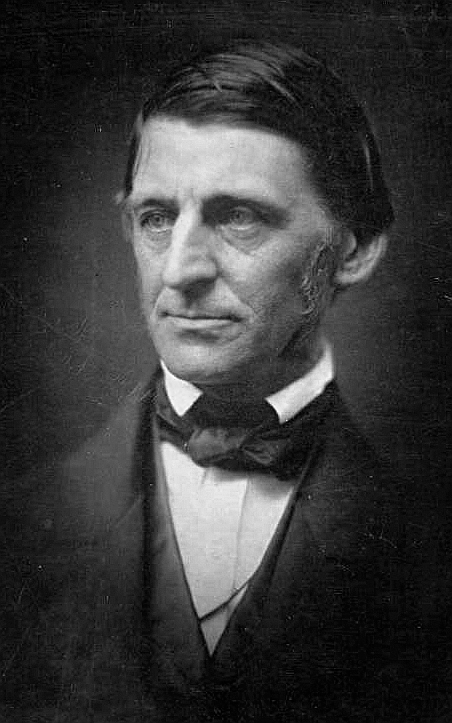
Ralph Waldo Emerson
Transcendentalism is  a religious movement where people had faith that they could be the best person they are if they stay true to themselves. The society was based on the goodness of people.


  Ralph Waldo Emerson was an American transcendentalist poet and philosopher. Ralph Waldo Emerson said, "Nobody can bring you peace, but yourself." Ralph was saying that you can only feel at peace or you can only be peaceful if you're own body and mind set is to be at peace. He was also saying that it is your choice to be at peace or not, its not anyone else's decision. Another quote by Ralph Emerson was, "The only way to have a friend is to be one." He was saying that people cannot ask for friends or expect someone to be their friend if they can't treat another person the same way.

Henry David Thoreau was also an American transcendentalist poet and philosopher. Henry Thoreau once said, "Its not what you look at that matters, its what you see."Henry was saying that anyone could look at an object, but it is the way you perceive it, meaning that anyone could look at something, but it is the way you decide to interpret it. He was also saying that people could be looking at the same thing and could have completely different feelings and meanings toward it. Another quote by Henry Thoreau was, "Things do not change we change." Henry was saying that nothing changes. Everything stays the same until you change yourself. Once you change yourself your mind and thoughts begin to change, not the thing itself.


Monday, March 2, 2015

Trail of Tears

In 1838 and 1839 Andrew Jackson forced the Cherokee nation, a Native American tribe, to give up their lands east of the Mississippi River and to move to what is now called Oklahoma. This was part of Andrew Jackson's Indian removal policy, which was a law that  authorized the President to take unsettled lands west of the Mississippi in exchange for lands that belonged to the Indians. The journey that the Native Americans took was known as "The Trail of Tears" because it took a lot of devastating effects on them, such as hunger and disease.

Trail of Tears
Black Hawk War
The Black Hawk War was a war in 1832. Sac and Fox Indians left their territory in Iowa to return to their lands in Illinois. White settlers grew angry and formed a militia. The militia could not find the Indians at first, but once they were found they engaged in a major conflict.

Second Seminole War
The Second Seminole War was a conflict in Florida between different groups of Native Americans, known as the Seminoles, and the United States. These conflicts in 1835 to 1842, became known as the Seminole Wars. The United States took possession of Florida and after a few years the Seminoles established a reservstion. The white settlers were trying to force the Indians out and move somewhere else. The Seminoles resisted and the white settlers got angry, which caused the conflict.


Native Americans on their journey


Sunday, January 4, 2015

Does Gender Shape the Experiences of Slaves?

Gender in some cases shaped  the experience of a slave.In 12 Years A Slave, both women and men had different abilities and tasks that they were told to do on the plantation. Men were more likely to do more strenuous work because they were considered to be stronger than the women. Women were most likely assigned to do cotton picking, cleaning, and housework. On the plantation in the film, both men and women were assigned to pick cotton. At the end of each day, all the slaves were put in a barn so that the master could be informed of the amount of cotton each slave picked. There was a women on the plantation named, Patsey. Patsey picked more cotton than any other slave, including the men. Because of this, the master took pride in her and she was hardly ever beaten or yelled at. Whoever was considered to not have picked enough cotton was taken and whipped. The gender did not matter if the slaves were to be beaten or not. If the slaves are obedient and do whatever they are told, most likely their master would not whip them or beat them, unless they wanted to because they felt like it. Gender really only affected the slaves in the type of work they did but gender did not really matter for the forms of violence. It also really depended on the master because whatever he felt and whatever he wanted to do, he could do it. Gender in one particular case, which is the type of work a slave did, shaped the experience of a slave.


Master is taking pride in Patsey because of the amount of cotton she picked

Film Supports James R. Bradley's Letter

The film, 12 Years A Slave, supports James R. Bradley's letter of slaves desiring freedom, but kept it to themselves to avoid harsher treatment. In the film, Soloman meets another slave on a ship. On the ship the slave told Soloman that they should not tell the white people of their ability to read and write. The reason the slave told this to Soloman, was because reading and writing were considered to be a freedom especially for a slave, and if their master or overseer found out that their slave could read or write, all the chances of them being able to do that anymore was taken away from them. Once Soloman was informed about not saying anything about his ablilty to read or write, he became cautious of keeping things to himself because his rights could be taken away from him. In James R. Bradley's letter, he wrote about that many slaves including himself longed for freedom, but had to keep it for themselves because if they did not their masters would make them work harder and they could even get beaten. Soloman desired his freedom because he was a free man and he would tell his masters that and at times he would get beaten and yelled at because of it. On one of the plantations Soloman overhears a woman crying because of her separation with her kids. He then tells her that if she keeps crying she will get beaten because shes longing for something she cannot get back, which will only annoy the master. Therefore, the film supports James R. Bradley's letter of slaves desiring for freedom, but kept it to themselves to avoid harsh and cruel treatment.


Soloman tells his master that he cannot read or write because he was accused of writing a letter.

Violence in Slave Society

Violence during the time of slavery consisted of many forms of violence. The most common forms of violence towards slaves were whippings and hangings. Many slave owners thought of slaves as they were animals and if they did anything wrong or that they felt was inappropriate, they would either whip the slaves with many lashes or hang them. In the film, 12 Years a Slave, Soloman, had a master who was a kind-hearted, however it was the overseer of the plantation that disliked him. They both had gotten into a fight and Soloman started whipping the overseer. A few days later the overseer brought over some of his fellow friends and decided to hang Soloman. Fortunately, Soloman's master stopped all the trouble and the ropes were cut off. Soloman was sold to another master, which was cruel and whenever he lied or didn't pick enough cotton in a day, he would get whipped with at least 100 lashes because his master felt he didn't work hard enough. On one of the plantations Soloman worked for there was a women who would pick more cotton than any other person that worked on the field including the men. Because of this, the master took pride in her and never wanted to beat her. The master's feelings toward their slave could change in an instant. Violence all depended on the master and the behavior of the slaves. If the master was pleasant he most likely wasn't as cruel as masters that just have hatred toward slaves and therefore would beat his slaves whenever he felt like it. If slaves were "obedient" they were most likely less vulnerable to those who caused trouble and tried to revolt.


Soloman getting hanged by the overseer of the plantation
   

Monday, December 22, 2014

Jennie Hendricks-Slave Narrative

Jennie Hendericks was the oldest of seven children. She was born in Georgia and her family was brought to Georgia from Virginia in 1936. Jennie was sold to a plantation owner, Mr.Moore. Mr.Moore was not considered rich because although he had a large plantation he did not have much slaves. Mr.Moore's family consisted of his wife and his six kids. Since Jennie was a child she was brought into the master's house and played with his children. Sometimes Mrs.Moore's son would become jealous because he felt that his mother was giving to much attention to Jennie. Jennie never had to do any work and was not allowed to read or write, but Mr.Moore's children always taught her how. One day Mrs.Moore even taught her how to sew because she seemed interested in it . Jennie was always given food and said it was even better than what most people had. After the war was over freedom was declared and Jennie and her grandmother stayed with Mr.Moore's family. Overtime Jennie's grandmother dies and she soon has a husband from another plantation. He describes that at other
plantations people get severely whipped and were treated very harsh. Jennie lived a very long time and it was believed that she lived long because she was obedient and had a firm belief in God.

I can conclude that Jennie was probably a few of many slaves that was not treated harshly. She had plantation owners who actually cared for her and took great care of her. She was pretty fortunate because like her husband said, at other plantations people were whipped and beaten. Jennie did what she told and behaved well and therefore she was treated with respect. She was probably on eof many slaves who had a kind-hearted master and things were fortunate for her.


Jennie Hendricks Slave Narrative


Jennie was born a slave in Georgia


Friday, December 12, 2014

Tecumseh Speech

Tecumseh's speech has an evident themes of bravery and challenges, Tecumseh states, "My people are brave and numerous, but the white people are too strong for them alone." This quote proves that there was a challenge for Tecumseh because he's trying to convince the Osages to unite with them because they are having problems with the white people and they feel that without them it would be challenging to defeat them alone. Tecumseh also says, "Who are white people that we should fear them?" This quote by Tecumseh proves that he is brave. Although he has a challenge of defeating the white people alone with his own tribe he is confident and brave. He believes that if they unite with the Osages they have enough strength and power to defeat the white people with uniting all the red men.

Song: "Break Free"  By: Ariana Grande
Ariana Grande's song, "Break Free" resembles the theme of bravery in Tecumseh's speech to the Osages. Ariana sings, "...When I say I don't want ya.. I'm stronger than I've been before ...This is the part when I break free." Ariana Grande's lyrics resembles the theme of bravery in Tecumseh's speech because she is explaining that she is not afraid anymore to tell her boyfriend, in her disastrous relationship, that she is going to stand up to him because she feels that she has the strength now. Likewise to Tecumseh's speech, he speaks to the Osages about how they shouldn't fear the white people once they unite because they feel that they'll have the strength the defeat the white people. Therefore "Break Free" by Ariana Grande resembles the theme of bravery in Tecumsehs speech to the Osages.


Tecumseh


Break Free Album Cover